In live events, touring, television, festivals, corporate shows and large-scale installations, time is one of the most expensive resources on site. Every hour spent loading trucks, building lighting rigs, cabling fixtures, troubleshooting, installing equipment or dismantling after the show affects the final cost of production. Crews are under pressure to work quickly, safely and consistently, often in venues where access time is limited and every delay has a direct financial impact.
This is exactly where pre-rig truss proves its value.
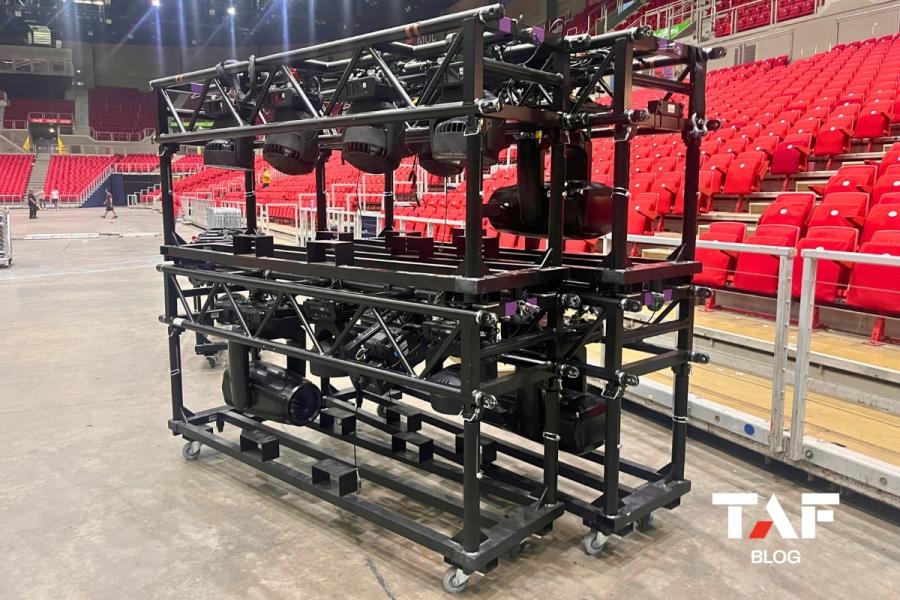
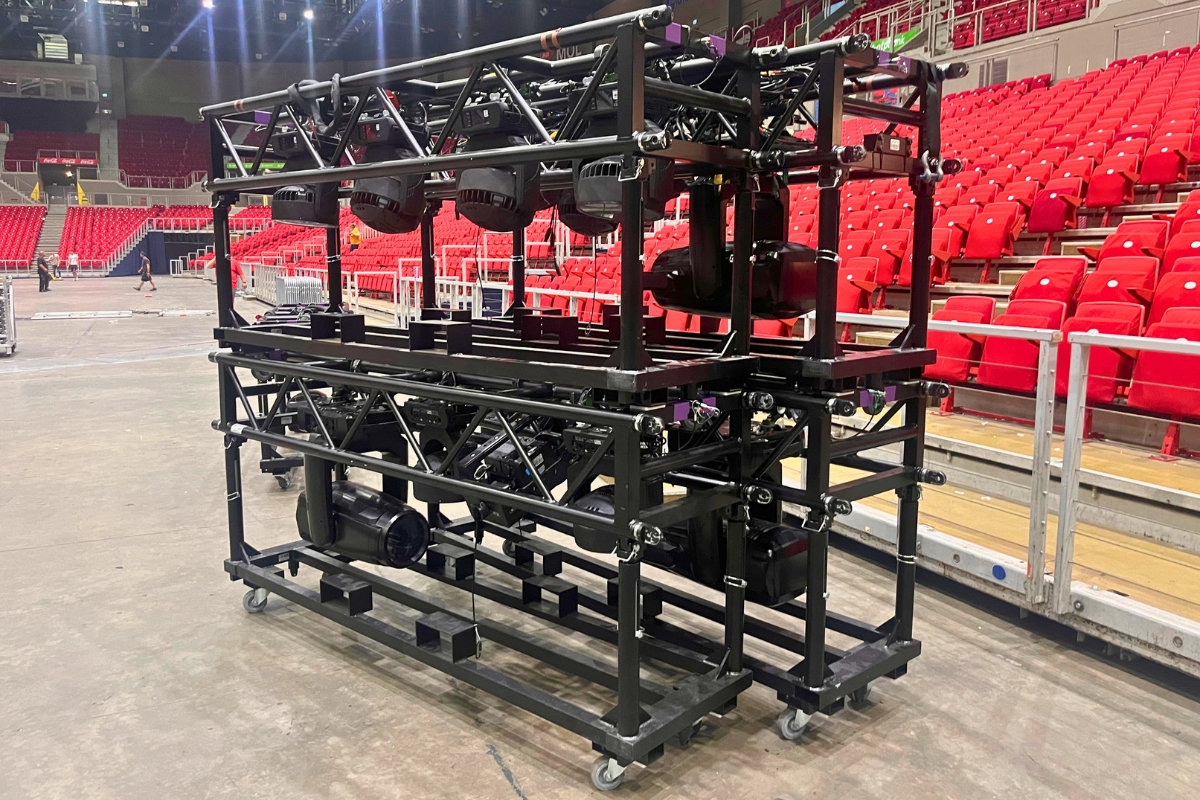
Pre-rig truss, also known as touring truss, moving light truss, or container truss, is designed to carry lighting fixtures, moving heads, cables and other show equipment while also serving as a transport and storage solution. Unlike standard truss, which is usually transported separately from the fixtures, pre-rig truss allows equipment to remain mounted, protected and often pre-cabled during transport. On site, the truss can be rolled into position, connected, flown and integrated into the show rig much faster than a traditional truss that is mounted together and equipped with lights, clamps, speakers, cables, brackets etc. at the show venue.
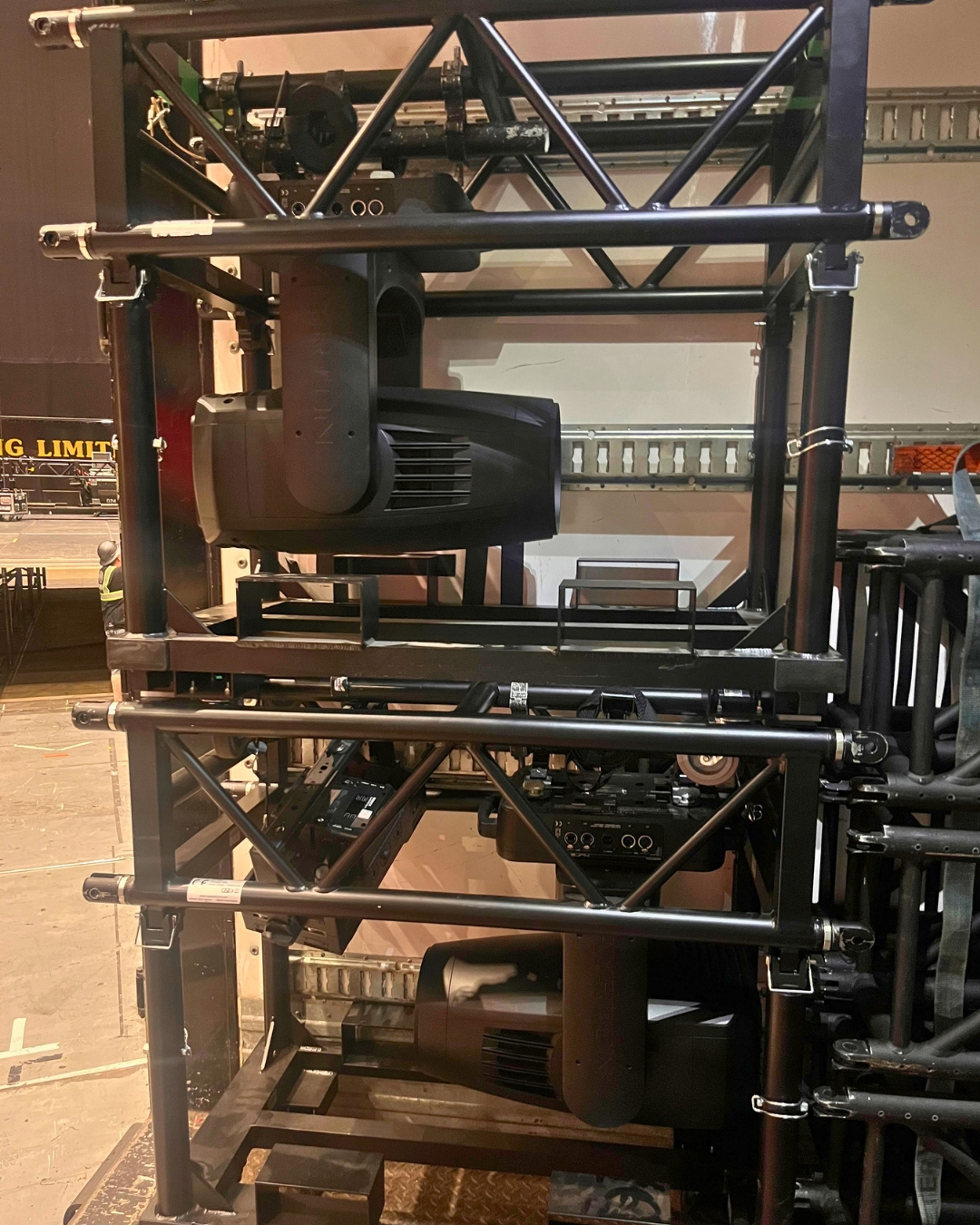
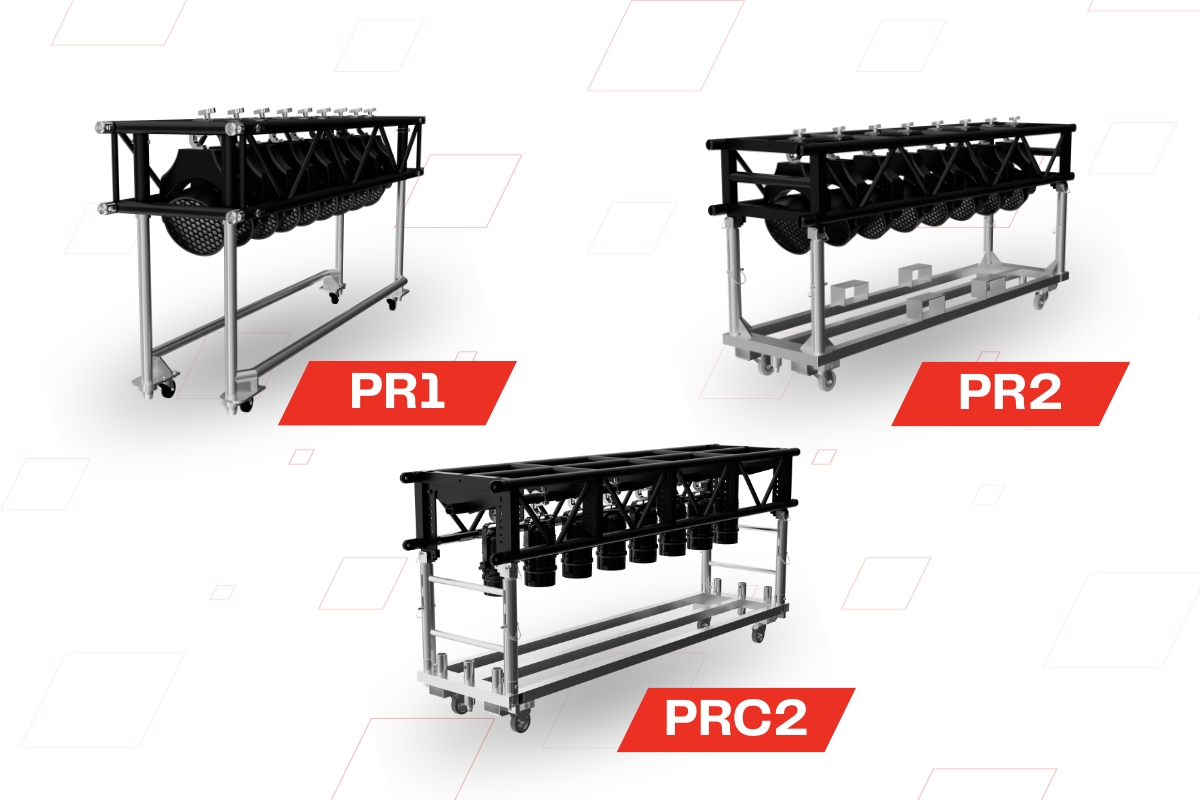
Pre-rig truss can be described as a professional rigging solution that significantly reduces both time and space requirements for successful rigging. The TAF systems PR1, PR2 and PRC2, for example, are designed so that lights, lasers, speakers, moving heads and similar equipment can remain placed inside the truss, moved on dollies around the warehouse, truck or venue, and used for storage, stacking and rigging in live productions.
What makes pre-rig truss different from standard truss?
The key difference is that pre-rig truss is not only a structural element. It is also a logistics tool.
With a conventional, standard trusses, fixtures are usually stored in flight cases, transported separately, unloaded, unpacked, clamped to the truss, cabled, tested, focused, and then removed again after the show. This process is repeated at every venue. It requires space, time, crew capacity and careful handling.
With pre-rig truss, much of this work can be done in advance. Fixtures can be installed in the truss in the warehouse, cables can be prepared, and the entire unit can be transported on a dolly. At the venue, the crew rolls the truss into place, connects sections, completes rigging checks, attaches motors or suspension points, and raises the system. This changes the workflow from “build everything on site” to “deploy a prepared system”.
1. Faster loading and unloading
The most obvious saving is time during loading and unloading.
In a traditional truss installation process, the crew may have to unload truss, unload lighting cases, assemble truss lines, open cases, remove fixtures, clamp fixtures, add safety ropes, run power and data, test everything, and then repeat the process in reverse after the show. For large productions, this can involve hundreds of fixtures and many hours of repetitive work.
Pre-rig truss compresses this process. Fixtures remain installed in the truss, often with cabling already prepared. The crew unloads complete truss modules, rolls them into position on dollies, connects the sections and prepares them for lifting. Some of the pre-rig trusses are designed to carry moving heads permanently, eliminating the need to store flight cases and truss separately in the warehouse or truck, and saving setup time and labour cost.
Once the pre-rig truss is mounted on a dolly, it is fast and comfortable to fix show equipment to the structure and move it as needed. Equipped trusses can also be attached at a comfortable working height before being rigged to the main structure.
For touring productions, this can be a decisive advantage. When the same or similar rig is used repeatedly across multiple venues, every hour saved at each stop accumulates into a significant reduction in labour costs, truck waiting time and venue overtime.
2. Lower labour costs
Labour is one of the most expensive items in event production. Pre-rig truss reduces labour not by replacing skilled crew, but by allowing that crew to spend less time on repetitive low value tasks.
Instead of repeatedly unpacking and re-mounting fixtures, technicians can focus on inspection, connection, safety checks, programming support and solving other challenges on site. This improves efficiency and also reduces fatigue, especially during demanding tour schedules where crews may face overnight load-outs and early morning load-ins.
The saving is not only in the number of crew hours. It is also in predictability. A rig prepared in advance makes it easier to estimate how long the build will take. For production managers, this helps with crew planning, truck scheduling, venue access windows and overall budget control.
3. Better use of truck and warehouse space
Transport space is another major cost. Touring productions often pay for each truck, trailer or container used. Reducing volume can directly reduce transportation costs.
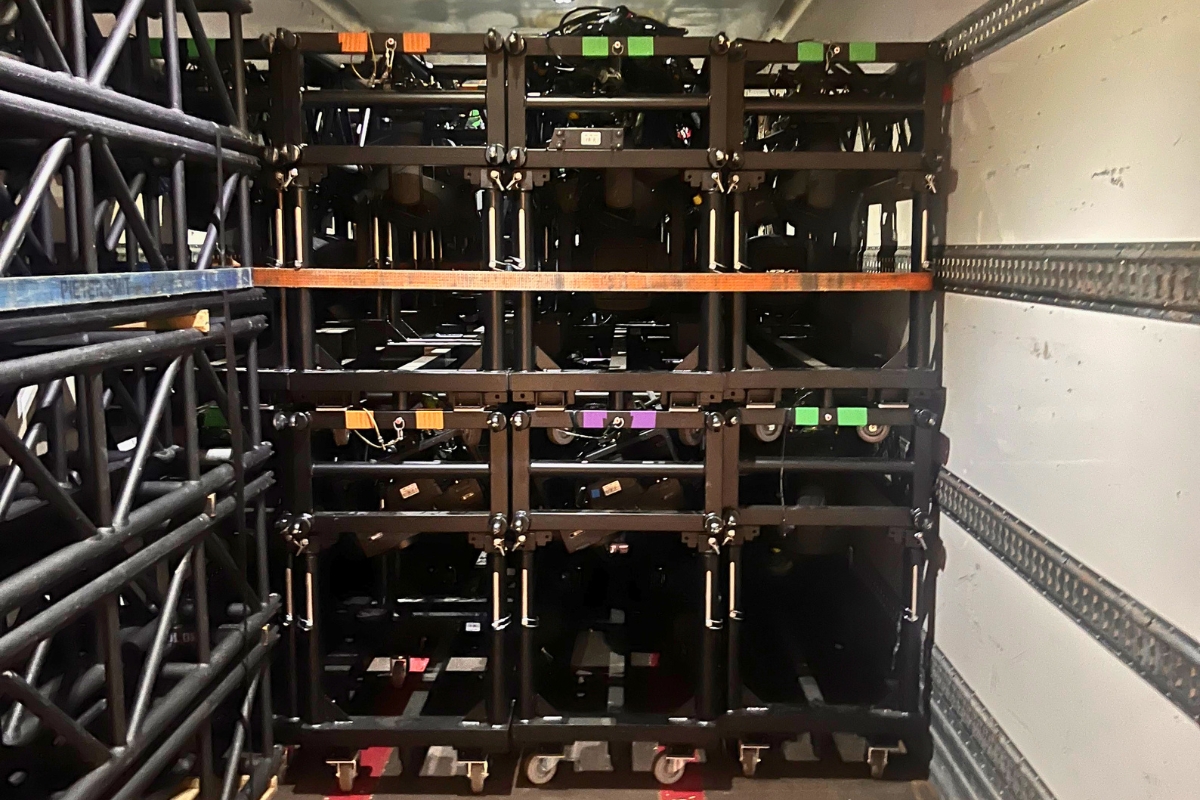
Pre-rig truss helps because the truss, fixtures and sometimes cabling travel as one integrated unit. Instead of loading separate truss sections, moving light flight cases and accessory cases, the production can transport prepared truss modules on dollies. Touring truss often removes the need for separate flight cases and truss in storage or in the truck, saving space as well as setup time and labour cost.
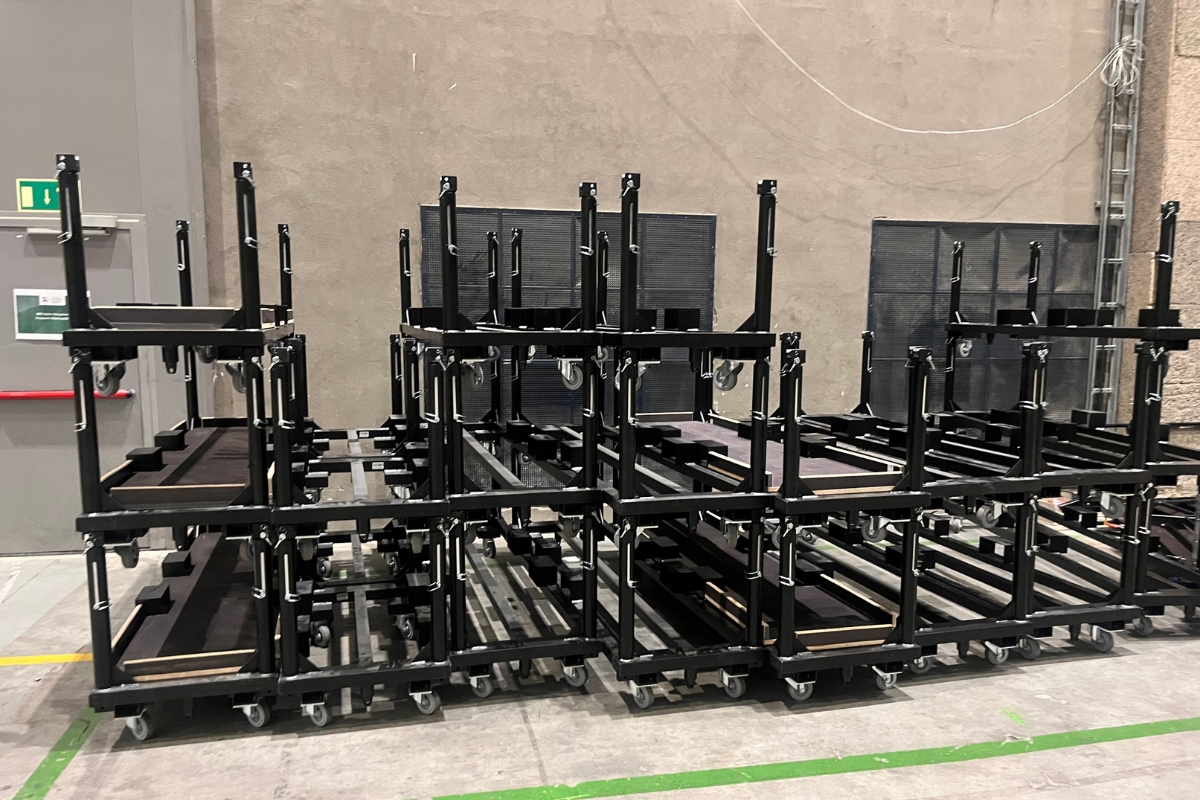
With TAF pre-rig portfolio it is also emphasized that equipped trusses on dollies can be stacked, saving space and labour time while loading and unloading show rigs from trucks.
Warehouse savings are also important. A rental company that stores fixtures already mounted in pre-rig truss can prepare recurring touring packages more efficiently. The equipment can stay organized, labelled and protected, rather than being repeatedly separated into truss stock, lighting stock and case stock.
4. Less handling and lower risk of damage
Every time a moving head or other fixture is removed from a case, lifted, clamped, secured, cabled, unclamped and packed again, there is a risk of damage. Scratches, bent brackets, broken connectors, damaged cables and other handling failures can all increase maintenance costs.
Pre-rig truss reduces the number of times fixtures are handled. Once installed, the equipment can remain in the truss for transport and storage. This is one of the reasons why pre-rig systems are often used for moving lights and other valuable production equipment.
Reduced handling also supports more consistent equipment condition. Fixtures can be prepared, tested and inspected in the warehouse before the tour or event. Once they are mounted in the truss, they are less exposed to repeated manual handling on every show day.
5. More efficient preparation in the warehouse
One of the biggest advantages of pre-rig truss is that work can be moved from the venue to the warehouse.
A warehouse is usually a more controlled environment than a venue. There is better lighting, more space, more predictable access, tools are close at hand, and technicians can prepare the system without the pressure of a strict schedule. Fixtures can be mounted at a comfortable working height, cables can be dressed cleanly, labels can be added, and the system can be tested before it leaves for the show.
TAF’s PR touring truss series is designed so equipment can be placed into the trusses and moved around the set, warehouse or truck using dollies.
This is particularly valuable for rental companies and production suppliers. They can build repeatable touring packages, prepare rigs for specific clients, and reduce on-site improvisation. When the rig arrives at the venue already organized and partially assembled, the installation crew can work more smoothly and with fewer surprises.
6. Safer and more ergonomic working conditions
Speed is important, but safety is even more important. Pre-rig truss can contribute to safer working methods by reducing the amount of manual lifting, overhead work and last-minute assembly under pressure.
When fixtures are mounted in the warehouse or at a lower working height, crews spend less time attaching heavy equipment above shoulder level or in awkward positions. Among TAF touring products features is the ability of the equipped trusses on dollies to be attached to each other at a comfortable working height before being rigged to the main structure.
Safety also improves through consistency. A prepared truss line can be checked before transport. Fixture positions, clamps, safeties and cable routing can be standardized. This reduces the chance of errors caused by rushing, poor visibility or limited venue time.
Of course, pre-rig truss does not remove the need for proper engineering, load calculations, inspection and competent rigging. It must always be used according to manufacturer instructions, load tables and applicable standards. But as part of a professional workflow, it can make the crew’s work more controlled and repeatable.
7. Faster replication of the same show
Pre-rig truss is especially valuable for tours, festivals, recurring corporate events and productions where the same rig design is used multiple times.
Once the lighting plot is translated into pre-rig truss sections, the same configuration can be reproduced show after show. Fixture spacing, cable routes and truss orientation remain consistent. This helps lighting designers, crew chiefs and technicians maintain the same setup across different venues.
For production companies, consistency means fewer mistakes. For rental companies, it means prepared systems can be rented repeatedly with predictable setup requirements. For artists and clients, it means the show can look more consistent from venue to venue.
8. Better return on investment
Pre-rig truss is usually more expensive than standard truss at the point of purchase. It is larger, more specialized and often includes dollies, rails, special connectors, folding legs or other accessories. However, the purchase price should not be evaluated in isolation.
The real question is total cost of ownership.
If a pre-rig system saves labour hours on every loading and unloading, reduces truck volume, lowers fixture damage, improves warehouse preparation, shortens venue time and allows the same rig to be deployed repeatedly, the investment can pay back over time.
For large tours, the savings may be visible very quickly. For rental companies, the value is also in efficiency, i.e. the same pre-rig truss can be prepared, rented, returned, inspected and redeployed with less handling than a fully separate truss, fixture and accessories package.
9. Applications beyond lighting
Pre-rig truss is most often associated with moving lights, but its use is broader. Depending on the system, design and manufacturer specifications, it can support lighting fixtures, video modules, LED elements, cable management, rigging components and other production equipment.
This flexibility matters because modern productions are increasingly integrated. Lighting, video, scenic elements and automation often need to work together in limited space and under tight schedules. A well-designed pre-rig system can support a cleaner, more organized technical package.
10. Why pre-rig truss matters for professional crews
For installation and production crews, the main benefit of pre-rig truss is not only that it is faster. It changes the nature of the work.
Instead of building the same rig from scratch every time, crews deploy a prepared system. Instead of repeatedly handling expensive fixtures, they move protected modules. Instead of solving basic logistics on site, they arrive with a system that has already been organized in the warehouse. Instead of losing time to unnecessary repetition, they can focus on safety, precision and show quality.
This is why pre-rig truss has become a standard solution for professional touring, rental and production environments. It saves time during load-in and load-out. It saves money through lower labour costs and better truck usage. It protects equipment. It improves consistency. And, when used correctly, it supports safer and more ergonomic working methods.
For TAF customers, pre-rig truss represents a practical step toward more efficient show logistics. Whether the project is a touring production, festival stage, television setup, rental package or fixed production workflow, the principle is the same: prepare more before arrival, handle equipment less, build faster on site, and keep the crew focused on what matters most - delivering a safe, reliable and professional show.